
Table of Contents
- How Do You Actually Get to San Siro for a Match or Concert?
- Is the Metro Enough on Its Own?
- What’s the Bigger Problem — Getting There or Getting Home?
- How Does a Private Driver Handle an Uncertain End Time?
- Do You Need to Worry About ZTL and Traffic Restrictions Near the Stadium?
- Is It Different for a Concert Than for a Football Match?
- How Far in Advance Should You Book?
- FAQ
Sixty thousand people leave San Siro at almost exactly the same moment, and every one of them has the same idea about how to get home. If you’ve ever tried booking a private driver San Siro pickup and wondered why the “getting there” part felt easy but the return trip felt like a gamble, you’ve already spotted the real problem this guide is actually about.
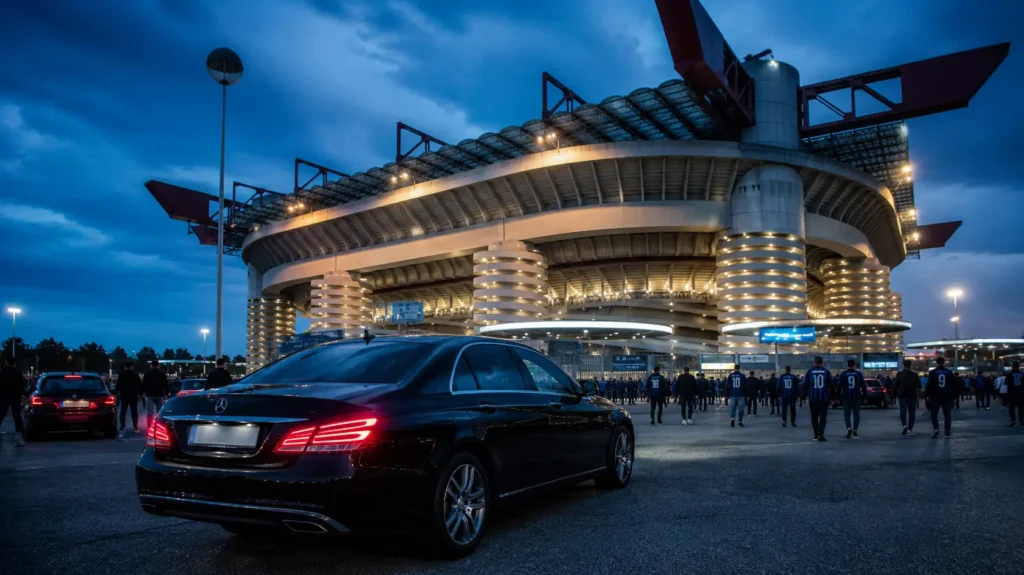
How Do You Actually Get to San Siro for a Match or Concert?
Getting there is genuinely the easy half. The M5 Lilla metro line runs straight to the San Siro Stadio stop, and if you’re coming from anywhere along the M2 green line, Garibaldi FS is the interchange to know. A dedicated shuttle also connects the Lampugnano parking area to the stadium on event days for anyone driving in themselves.
A private driver simplifies this further, dropping you as close to the entrance as traffic restrictions allow rather than having you walk the final stretch from a metro exit with a crowd. For groups or families, that difference matters more than it sounds like it should, particularly if you’re juggling kids, tickets, and getting everyone through the gates before kickoff.
Is the Metro Enough on Its Own?
For arrival, honestly, yes. It’s reliable, it runs frequently, and it’s genuinely the sensible default for most solo attendees or small groups with no time pressure.
Where it starts to strain is exactly where you’d expect — the exit, when the entire stadium’s crowd tries to use the same station within the same fifteen-minute window. This isn’t a knock on the metro system itself, it’s just physics. A fixed number of trains cannot absorb sixty thousand people leaving simultaneously without a genuine wait.
What’s the Bigger Problem — Getting There or Getting Home?
Getting home, without question, and it’s worth being direct about why. Arrival times are fixed and known well in advance. You know your ticket time, you plan around it, done. Departure is the opposite — nobody knows exactly when a football match actually ends until it ends, and a concert’s finish time depends entirely on whether the artist plays one encore or four.
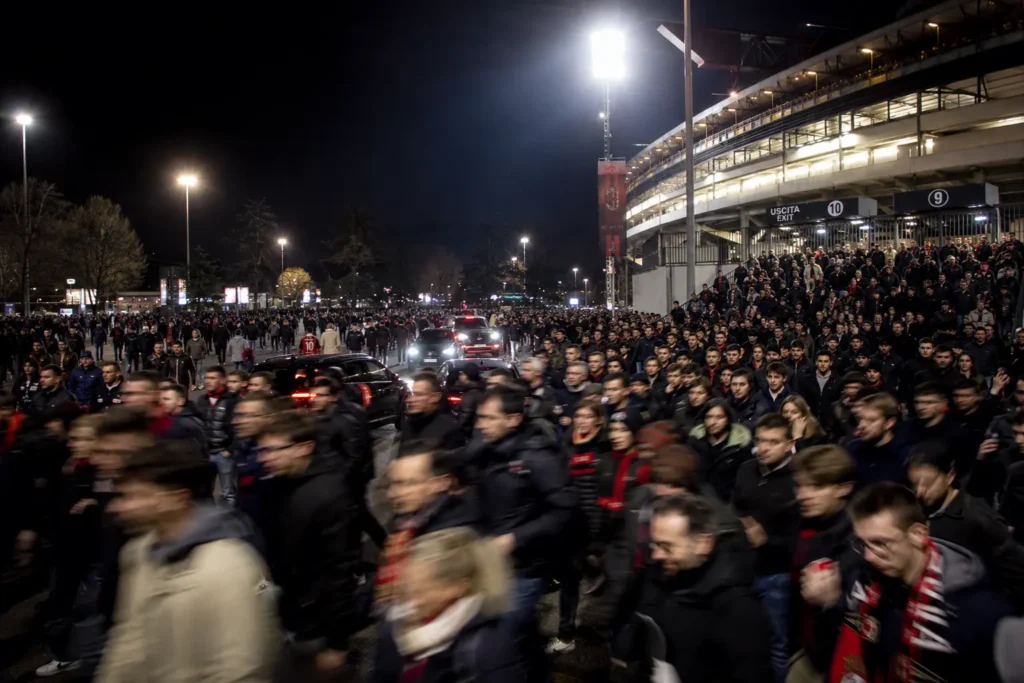
This uncertainty is precisely what most transport planning, public or private, fails to account for. A shuttle bus running on a schedule that assumed a 90-minute match doesn’t help you when extra time and stoppage time push the final whistle twenty-five minutes later than planned.
How Does a Private Driver Handle an Uncertain End Time?
This is genuinely where a pre-booked driver earns the cost difference over public transport, and it’s worth understanding the actual mechanism rather than taking it on faith. A driver who’s handled stadium pickups before doesn’t wait at a fixed time, they wait for you to actually message when the event is wrapping up, adjusting their positioning based on real crowd flow rather than a printed schedule.
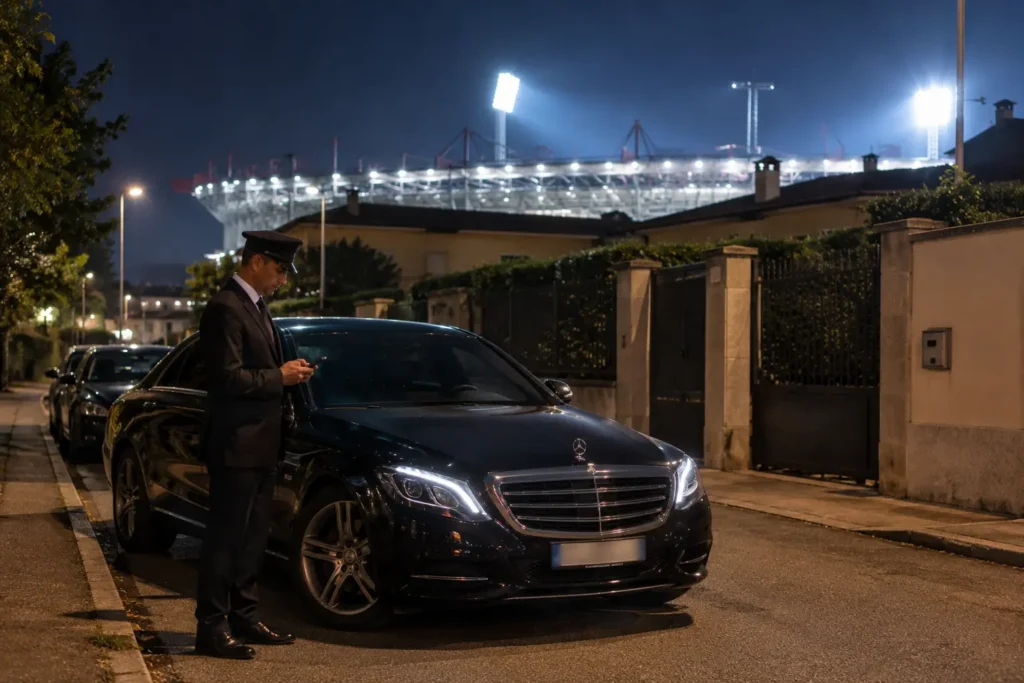
For event transport specifically, this flexibility is the entire point — a fixed pickup slot is exactly the wrong tool for an event with no fixed end time, and treating it as one is where most stadium transport plans quietly fall apart.
Do You Need to Worry About ZTL and Traffic Restrictions Near the Stadium?
The area does fall within Milan’s regulated traffic zones — Area B, Area C, and ZTL restrictions apply depending on the exact street, confirmed directly through the Comune di Milano’s own guidance. This matters less for you as a passenger than it does for whoever’s driving, since licensed operators navigate these zones with the correct authorization built in, while an unfamiliar rental driver might genuinely struggle with which streets are accessible on an event night with additional temporary closures layered on top.
Is It Different for a Concert Than for a Football Match?
Meaningfully, yes, and mostly around timing predictability. A football match has a defined structure — 90 minutes plus stoppage time plus potential extra time, so the uncertainty window is real but bounded. A concert’s end time genuinely depends on the artist, the setlist, and whether there’s an encore, which can shift your actual departure by anywhere from ten minutes to well over an hour compared to the advertised end time.
San Siro’s concert calendar has run everything from legendary international rock acts to major pop and trap artists across recent summers, and each show’s actual finish time varies enough that treating concert pickup the same way you’d treat a scheduled train connection is a genuine planning mistake.
How Far in Advance Should You Book?
As soon as you have your ticket, ideally. Vehicle availability for major matches and big-name concerts tightens considerably as the event approaches, since you’re not the only person who’s realized public transport gets rough at the exit. For groups needing a larger vehicle specifically, booking early matters even more, since van and minibus availability disappears faster than standard sedan availability on genuinely big event nights.
FAQ
How do I get to San Siro Stadium without a car?
The M5 Lilla metro line runs directly to the San Siro Stadio stop, with Garibaldi FS serving as the main interchange point from the M2 line.
Is it hard to get a taxi after a match at San Siro?
Yes, noticeably. Demand spikes the moment the final whistle blows, and taxi availability right around the stadium can lag well behind demand for the first twenty to thirty minutes after a match ends.
Can a private driver wait for an uncertain end time?
Yes, this is essentially the core value of pre-booking one for a stadium event — a good driver coordinates pickup timing based on your message once the event is actually wrapping up, not a fixed slot booked in advance.
Does San Siro have parking restrictions nearby?
Yes, the surrounding area includes Area B, Area C, and ZTL zones, confirmed through official Comune di Milano guidance, which is part of why a licensed local driver navigates event nights more smoothly than an unfamiliar rental car.
Is San Siro used for concerts as well as football?
Yes, it’s hosted major international concerts since 1980, alongside being the shared home stadium of both AC Milan and Inter.
Getting to San Siro was never really the hard part — the metro handles that fine on any normal day. What actually trips people up is assuming the trip home will be just as predictable when sixty thousand other people are working through the exact same bottleneck at the exact same time, with an end time nobody can pin down until it happens. If you’ve got tickets to a match or a show there and want the return trip sorted rather than gambled on, get in touch and we’ll coordinate pickup around the actual event, not a printed schedule.